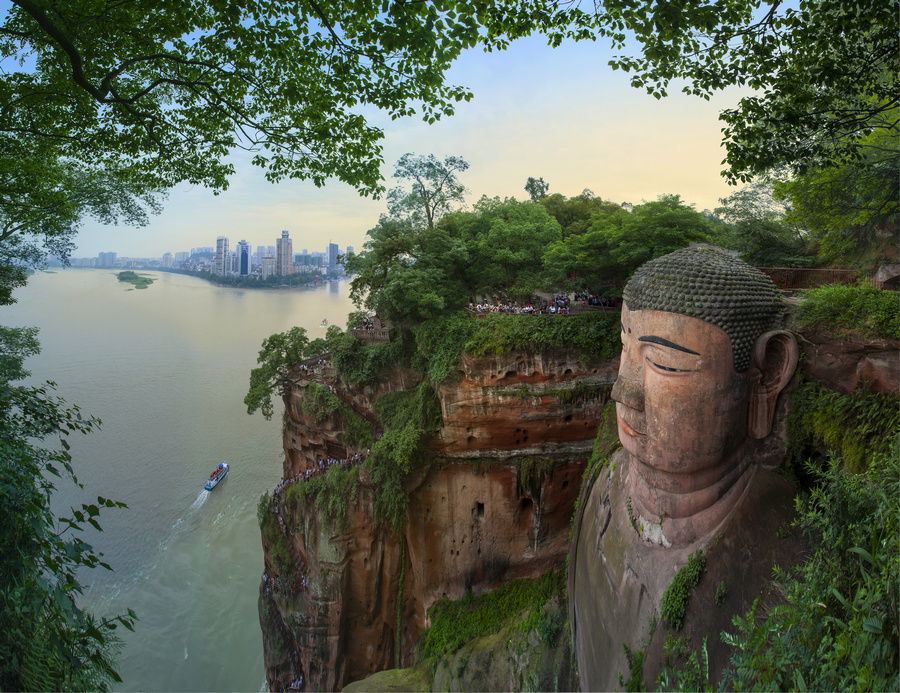
Leshan Giant Buddha
Introduction
The Leshan Giant Buddha, also known as the "Lingyun Giant Buddha," is a monumental stone statue located at the confluence of the Dadu, Qingyi, and Minjiang rivers in Leshan City, Sichuan Province, China. The site is part of the Leshan Giant Buddha Scenic Area, which spans 2.5 square kilometers and is a UNESCO World Heritage Site, recognized for its cultural and natural significance.
The statue represents Maitreya, a bodhisattva traditionally regarded as a future Buddha in Buddhist eschatology. Construction of the Leshan Giant Buddha began in 713 during the Tang Dynasty and was completed in 803, taking nearly 90 years to finish. The site is not only a marvel of ancient craftsmanship but also a sacred location for Buddhist worship and pilgrimage. The integration of cultural features with natural scenery makes it a unique and precious legacy.
The Leshan Giant Buddha is renowned for its architectural ingenuity, including a sophisticated drainage system that protects the statue from weathering. The site also features over 90 stone carvings and Buddhist shrines, further enriching its cultural and historical value. Today, the Leshan Giant Buddha attracts millions of visitors annually, both domestic and international, making it one of China's most iconic and celebrated landmarks.
Architecture and Design
The Leshan Giant Buddha is a masterpiece of ancient Chinese engineering and artistry. Standing 71 meters tall, it is the largest stone sculpture of a seated Buddha in the world. The statue is carved directly into the cliffs of Lingyun Mountain, with its back against Mount Jiuding and its gaze directed toward the confluence of the Dadu, Qingyi, and Minjiang rivers. The Buddha's serene expression and imposing presence make it a symbol of peace and spiritual enlightenment.
One of the most remarkable features of the statue is its intricate hair design. The Buddha's head is adorned with 1,051 coiled buns, each skillfully embedded into the stone. This meticulous craftsmanship adds to the statue's aesthetic appeal and showcases the advanced techniques of Tang Dynasty artisans.
Another architectural highlight is the Buddha's drainage system, which is ingeniously integrated into the statue's design. Hidden gutters and channels are carved into the statue to divert rainwater away from its surface, preventing erosion and preserving its structural integrity. This system has played a crucial role in protecting the statue from weathering over the centuries.
The statue's proportions are meticulously balanced, with its head measuring 14.7 meters in height and 10 meters in width. The shoulders span 28 meters, and the feet, large enough to accommodate over 100 people sitting side by side, measure 8.5 meters in length. These dimensions not only emphasize the Buddha's grandeur but also reflect the skill and precision of its creators.
Surrounding the statue are more than 90 stone carvings and Buddhist shrines, further enhancing the site's cultural and artistic value. The integration of the statue with the natural landscape of Lingyun Mountain creates a harmonious blend of human ingenuity and natural beauty, making the Leshan Giant Buddha a unique and awe-inspiring monument.
Cultural Significance
The Leshan Giant Buddha holds profound cultural and spiritual significance. As a representation of Maitreya, the Buddha of the future, the statue embodies hope, compassion, and the promise of enlightenment. It has been a sacred site for Buddhist worship and pilgrimage for over a millennium, attracting devotees from across China and beyond.
The statue's construction reflects the deep-rooted Buddhist traditions of the Tang Dynasty, a period when Buddhism flourished in China. It also symbolizes the harmonious coexistence of human culture and the natural environment, as evidenced by the seamless integration of the statue with the surrounding landscape.
In addition to its religious importance, the Leshan Giant Buddha is a cultural icon that showcases the artistic and engineering achievements of ancient China. Its intricate design and advanced construction techniques are a testament to the ingenuity and dedication of its creators. The site also serves as a repository of Buddhist art and culture, with its numerous stone carvings and shrines offering valuable insights into the spiritual and artistic heritage of the Tang Dynasty.
The Leshan Giant Buddha has also become a symbol of Sichuan Province and a source of pride for the local community. Its inclusion as a UNESCO World Heritage Site in 1996 underscores its global significance and highlights its role as a cultural bridge between China and the world.
Tourism
The Leshan Giant Buddha is one of China's most popular tourist destinations, attracting millions of visitors annually. The scenic area offers a range of attractions and activities, making it a must-visit location for both domestic and international travelers.
Visitors can explore the statue up close by climbing the stone steps carved into the cliffs, which provide breathtaking views of the Buddha and the surrounding rivers. Boat tours are also available, offering a unique perspective of the statue from the water. The site is particularly beautiful during the spring and autumn months, when the weather is mild and the natural scenery is at its best.
To enhance the visitor experience, the Leshan Giant Buddha Scenic Area provides a variety of services, including multilingual tour guides, AI translation devices, and online ticketing platforms. These initiatives aim to make the site more accessible and enjoyable for international tourists. The scenic area has also established partnerships with travel agencies worldwide to promote its cultural and tourism resources.
In addition to the Buddha statue, visitors can explore nearby attractions such as Emei Mountain, another UNESCO World Heritage Site known for its stunning natural landscapes and rich Buddhist heritage. Together, these sites offer a comprehensive experience of Sichuan's cultural and natural treasures.
Legends and Folklore
The Leshan Giant Buddha is surrounded by a rich tapestry of legends and folklore that add to its mystique. One popular legend involves the monk Haitong, who is said to have initiated the construction of the statue. According to the story, Haitong's unwavering devotion inspired the local community to support the project, and his self-sacrifice demonstrated the depth of his faith.
Another legend suggests that the Buddha's presence has a calming effect on the rivers, preventing floods and ensuring the safety of passing ships. This belief has made the statue a symbol of protection and benevolence for the local population.
The site is also associated with natural phenomena such as the "Buddha's halo," a rare optical effect that occurs under specific conditions. When sunlight interacts with water droplets in the air, it creates a rainbow-like halo around the viewer's shadow, adding an element of wonder to the site. Visitors have also reported witnessing "holy lights," mysterious glowing orbs that appear after rain, further enhancing the site's spiritual allure.
These legends and phenomena contribute to the Leshan Giant Buddha's status as a place of mystery and reverence, attracting pilgrims and tourists alike who seek to experience its unique blend of history, culture, and spirituality.








